Generals and battles typically fill the pages of history books, but often, it’s the unsung heroes of innovation that truly shape the course of conflict. A better boot, a more reliable rifle, or in this case, a superior saddle. This is the remarkable story of the U.S. Cavalry’s iconic McClellan saddle—a journey that crosses continents, connects ancient empires to the American frontier, and proves that sometimes, a revolution is carried on horseback.
It all begins with a problem born of necessity.
A New Nation, A Heavy Burden
In the summer of 1776, a frustrated General George Washington urged Congress to establish mounted units for his Continental Army. Speed and agility were desperately needed. But while the U.S. Cavalry was born, its equipment was holding it back. For decades, American troopers were weighed down by saddles that were heavy, cumbersome, and ill-suited for the demands of modern warfare.
Before the McClellan saddle changed the game in 1859, the cavalry relied on several flawed designs:
- The Grimsley Saddle (1847-1859): The standard issue before McClellan, the Grimsley was sturdy but punishingly heavy. Designed for dragoons who often fought on foot, it limited the mobility that was the cavalry’s greatest asset.
- The Ringgold & Campbell Saddles: These earlier models were even less common and suffered from similar issues—too heavy, not ergonomic, and a burden on both horse and rider.
These saddles didn’t just tire out the horses; they limited the tactical possibilities of the entire cavalry. The stage was set for a revolution in equestrian technology. To find its source, we must look much further back in time—and much farther east.
Ancient Roots: The Ghost Riders of the Steppe
The secret to the perfect light saddle wasn’t born in a Western workshop, but on the vast, windswept steppes of Central Asia.
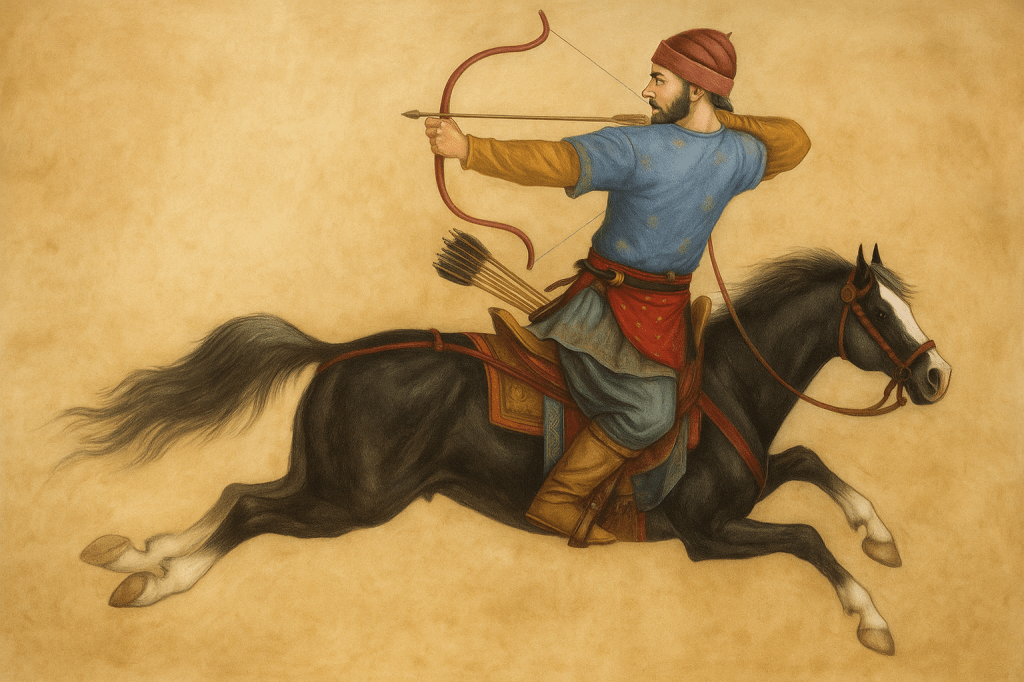
Centuries earlier, nomadic horsemen like the Mongols had perfected the art of mounted warfare. Their secret weapon was a lightweight, wooden saddle with a high pommel and cantle. This revolutionary design gave a rider incredible stability, even at a full gallop, freeing their hands for the legendary skill of mounted archery. This technology—light, durable, and perfect for long journeys—spread with the Turkic tribes to the rising Ottoman Empire.
The Ottomans refined these designs, creating saddles that maximized mobility and comfort for both horse and rider, turning their light cavalry into one of the most feared military forces in the world.
The Spark Ignites Europe: Rise of the Hussars
When the Ottoman Empire’s lightning-fast cavalry raided the borders of Europe, the heavy, armored knights of the West were often powerless to respond. Their swift, unpredictable attacks posed an unsolvable problem.
Nations on the frontier, like Hungary and Serbia, realized they had to adapt or be conquered. They formed their own light cavalry units, the Hussars, and copied the superior technology of their adversaries—including the light saddle. The Hungarian hussar saddle was a direct evolution of the steppe design, built on a light wooden frame that distributed weight perfectly and gave the horse maximum freedom of movement.
This design became the gold standard for light cavalry across Europe, adopted by military powers from Prussia to Russia. And it was there, in Europe, that an American officer finally saw the future.
The American Connection: A Captain’s Vision
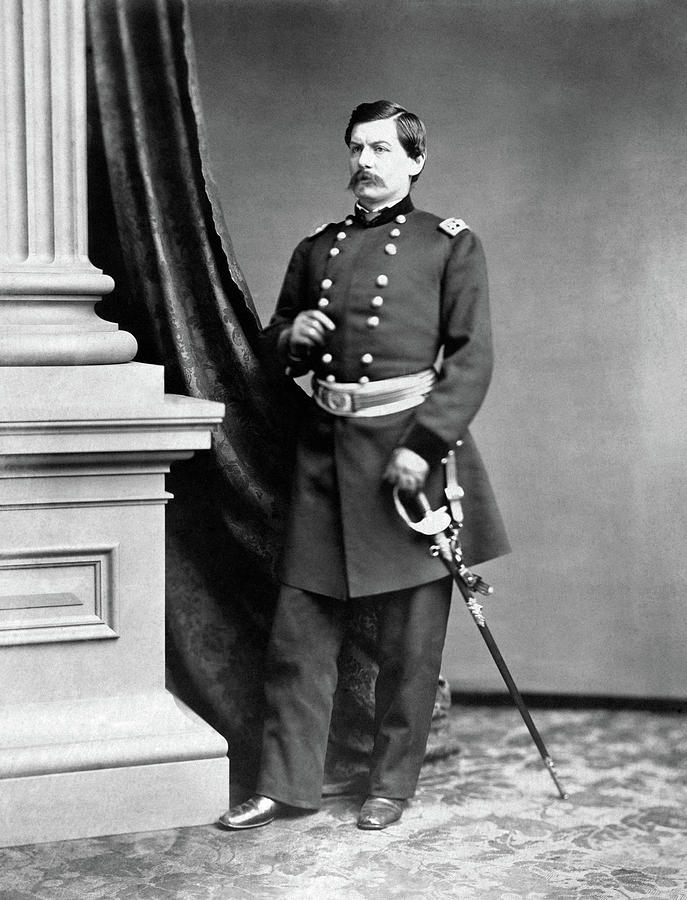
In the 1850s, a young and observant U.S. Army officer, Captain George B. McClellan, was sent to Europe as part of a military commission to study the latest developments in warfare. While observing the agile European hussars and their equipment, he had a revelation. He recognized that their lightweight, horse-friendly saddle was the solution to the American cavalry’s long-standing problem.
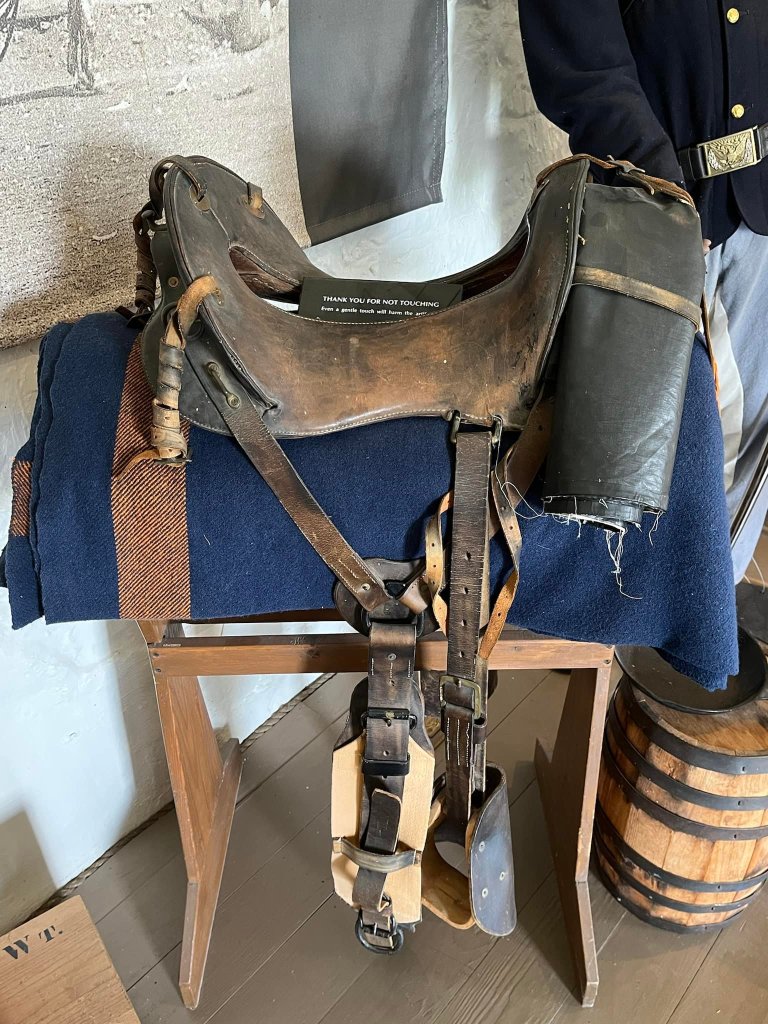
Upon his return, McClellan designed a radically new saddle inspired by what he had seen. Introduced in 1859, the McClellan saddle was a masterpiece of minimalist design. It was light, durable, and provided excellent ventilation for the horse’s back, dramatically increasing the endurance and effectiveness of a mounted soldier. It replaced the heavy Grimsley and would carry U.S. cavalry troopers through the Civil War, the Indian Wars, the Spanish-American War, and remarkably, even into World War II.
A Lasting Legacy: From Steppe Winds to Parade Grounds
Today, the U.S. Cavalry rides only in a ceremonial capacity. Yet, the legacy of this incredible journey endures. At Fort Cavazos, the 1st Cavalry Division Horse Cavalry Detachment still mounts up for parades and historical demonstrations—riding on handcrafted McClellan replicas made in their very own leather shop.
From the windswept steppes of Mongolia to the manicured parade grounds of Texas, a single, brilliant saddle design has crossed continents, centuries, and countless miles of open trail. It stands as a quiet reminder that true innovation often rides a very long road before it becomes tradition.
Photo (Saddle): National WWI Museum and Memorial.
 Ekrem Kus
Hinterlasse einen Kommentar